


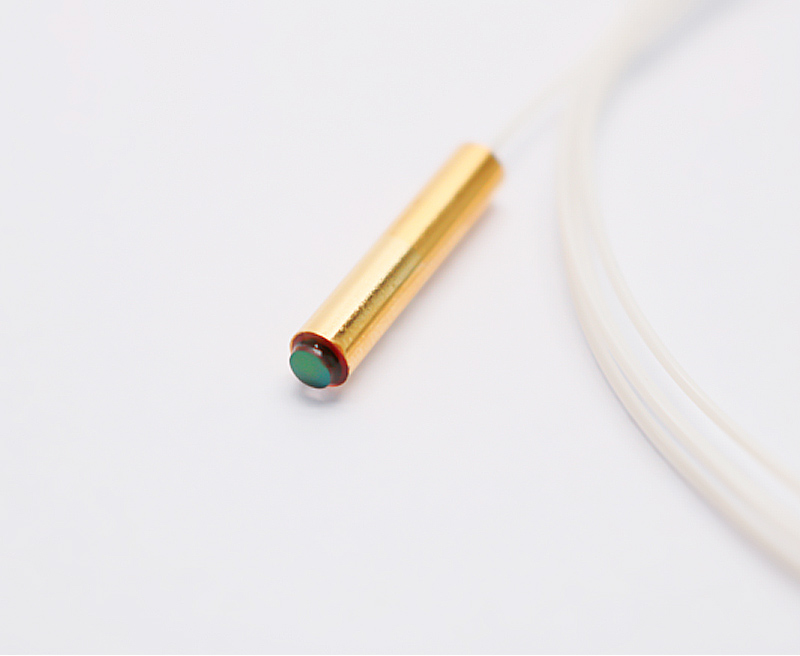
High-Power Polarization-Maintaining Fiber Collimator: The Core Optical Engine Empowering Modern High-Power Laser Systems
In modern industrial processing, scientific research, and defense applications, high-power, high-beam-quality, and highly stable laser systems have become indispensable core tools. To efficiently and reliably transmit and apply the “light energy” generated by lasers to the target, high-power polarization-maintaining fiber collimators play a crucial role. They are not only the “last mile” of the fiber laser system output but also the key optical component that determines the performance limit of the entire system.
I. Core Application Characteristics
High-power polarization-maintaining fiber collimator is a precision optical device that collimates high-power laser light from a polarization-maintaining fiber into a high-quality parallel beam. Its application characteristics are distinct, mainly reflected in the following aspects:
- High Power Handling Capacity: This is its most fundamental characteristic. It uses specially designed lenses (such as aspheric lenses, C-lenses, etc.), low-absorption/low-thermal-expansion lens materials (such as fused silica), and efficient anti-reflective coatings, enabling it to withstand hundreds to thousands of watts of continuous laser power or high-energy pulses, ensuring long-term stable operation without thermal lensing effects or coating damage.
- Strict Polarization Maintenance: Unlike ordinary collimators, it is specifically designed for polarization-maintaining fibers. Its internal optical axis is precisely aligned to ensure that the linearly polarized light output from the fiber maintains its polarization state to the greatest extent after passing through the collimator, with minimal degradation of the polarization extinction ratio (PER). This is crucial for applications that rely on polarization characteristics (such as coherent beam combining, nonlinear frequency conversion, and precision interferometry).
- Excellent Beam Quality: An excellent collimator minimizes aberrations, outputting a parallel beam close to the diffraction limit (extremely small divergence angle, typically <0.5 mrad). This ensures that the laser energy remains highly concentrated after long-distance transmission, resulting in a small focal spot and high power density, directly improving processing accuracy and efficiency.
Modularity and Flexibility: It integrates complex optical path alignment and debugging work into a robust, miniaturized package. Users can obtain a stable collimated beam output simply by connecting it to a polarization-maintaining fiber, greatly simplifying system integration and improving system maintainability and replaceability.
II. Core Advantages in Laser Systems
Integrating high-power polarization-maintaining fiber collimators into laser systems brings comprehensive performance improvements and engineering advantages:
1. Enhanced System Stability and Reliability
- Strong anti-interference: The fully enclosed structure effectively isolates environmental pollutants suchs as dust and moisture, protecting the precision optical surfaces.
- High mechanical stability: Using processes such as metallized welding or active alignment and bonding, the optical components are securely fixed, providing excellent shock and vibration resistance, preventing optical path deviation caused by vibration.
- Excellent thermal management: The low heat absorption design and metal casing facilitate heat dissipation, preventing optical performance degradation or device damage due to heat accumulation.
2. Efficient Energy Transmission and Beam Control
- Low insertion loss: High-quality coatings and optical design result in extremely high transmittance (typically >99.5%), minimizing laser energy waste.
- Foundation for subsequent optical systems: The high-quality collimated beam output is an ideal input for subsequent operations such as beam expansion, scanning (e.g., galvanometer), focusing, and beam combining, ensuring the efficiency and quality of the entire beam transmission link.
3. Enabling Advanced Laser Technology
- Polarization multiplexing/coherent combining: The polarized light output from multiple polarization-maintaining fiber laser units, after passing through their respective polarization-maintaining collimators, can be combined using polarization beam combiners or coherent beam combining techniques to achieve a significant increase in power while maintaining beam quality. This is the mainstream technical path for achieving ultra-high power laser output above tens of kilowatts.
- Nonlinear frequency conversion: Processes such as second harmonic generation (SHG) and sum-frequency generation (SFG) are extremely sensitive to the polarization and beam quality of the pump light. The polarization-maintaining collimator provides an ideal input light source, significantly improving conversion efficiency.
- Free-space optical communication and LiDAR: Precisely transmitting lasers to distant targets requires a high-quality collimated beam with a low divergence angle, which is crucial for ensuring the quality of the communication link and detection accuracy. 4. Reducing Total Cost of Ownership (TCO)
- Simplified Integration and Debugging: Plug-and-play features significantly reduce system assembly and optical alignment time.
- Reduced Maintenance Requirements: High reliability reduces downtime for maintenance and lowers spare parts costs.
- Improved Processing Quality and Consistency: Stable beam output directly leads to better processing results and product yield, ultimately reducing production costs.
III. Typical Application Scenarios
- Industrial Manufacturing: Fiber laser cutting, welding, cladding, 3D printing (metal additive manufacturing).
- Scientific Research: High-power laser physics, atomic cooling and trapping, ultrafast optical pumping sources.
- Medical Equipment: Laser surgical knives, ophthalmological treatment, dental processing.
- Defense and Aerospace: LiDAR, directed energy weapons, target designation, material processing.
Conclusion
High-power polarization-maintaining fiber collimators have evolved from simple beam transformation components into the “performance amplifier” and “stability cornerstone”of modern high-power laser systems. They integrate high-power handling capabilities, polarization-maintaining characteristics, excellent beam quality, and engineering robustness. This not only solves the technical challenges of high-power laser transmission and control but also drives the development of fiber laser technology towards higher power, better performance, and wider application areas. As laser technology continues to advance, higher demands will be placed on its power threshold, thermal management, and intelligent integration (such as integrated beam diagnostic functions), further solidifying its position as a core optical engine.